How Automotive Injection Molding Supports Next-Generation Vehicle Manufacturing

The automotive industry is undergoing a major transformation driven by electrification, advanced safety systems, lightweight engineering, connectivity, and increasingly sophisticated vehicle designs. As manufacturers work to develop vehicles that are more efficient, reliable, and technologically advanced, production methods must also evolve. Automotive Injection Molding has become an important manufacturing process for producing the precise, durable, and lightweight components required by modern vehicles.
From interior panels and dashboard components to battery housings, electrical enclosures, clips, and exterior parts, injection molding provides manufacturers with a flexible way to produce complex components at scale. Its combination of repeatability, design flexibility, material efficiency, and high-volume production makes it particularly valuable for next-generation vehicle manufacturing.
Supporting Lightweight Vehicle Design
Weight reduction is a major priority in modern automotive engineering. Lighter vehicles can require less energy to operate, which is especially important for electric vehicles where reducing weight can contribute to improved driving efficiency and range.
Automotive Injection Molding enables manufacturers to replace certain traditionally manufactured metal components with engineered plastic parts. Advanced polymers can provide an effective balance of strength, durability, dimensional stability, and low weight.
Injection molding also allows engineers to create components with strategically positioned ribs, supports, and reinforced sections. These design features can provide structural performance without requiring unnecessary material throughout the entire component.
Engineering Components for Better Efficiency
Modern automotive components often need to satisfy several requirements simultaneously. A component may need to be lightweight while also resisting vibration, heat, chemicals, and repeated mechanical stress.
Engineers can select different thermoplastics and reinforced materials according to the intended application. Glass-fiber-reinforced polymers, heat-resistant materials, and other engineered plastics can be molded into precise shapes that meet specific performance requirements.
This flexibility gives vehicle manufacturers greater opportunities to optimize individual components rather than relying on a single material or manufacturing method for every application.
Enabling Complex Automotive Designs
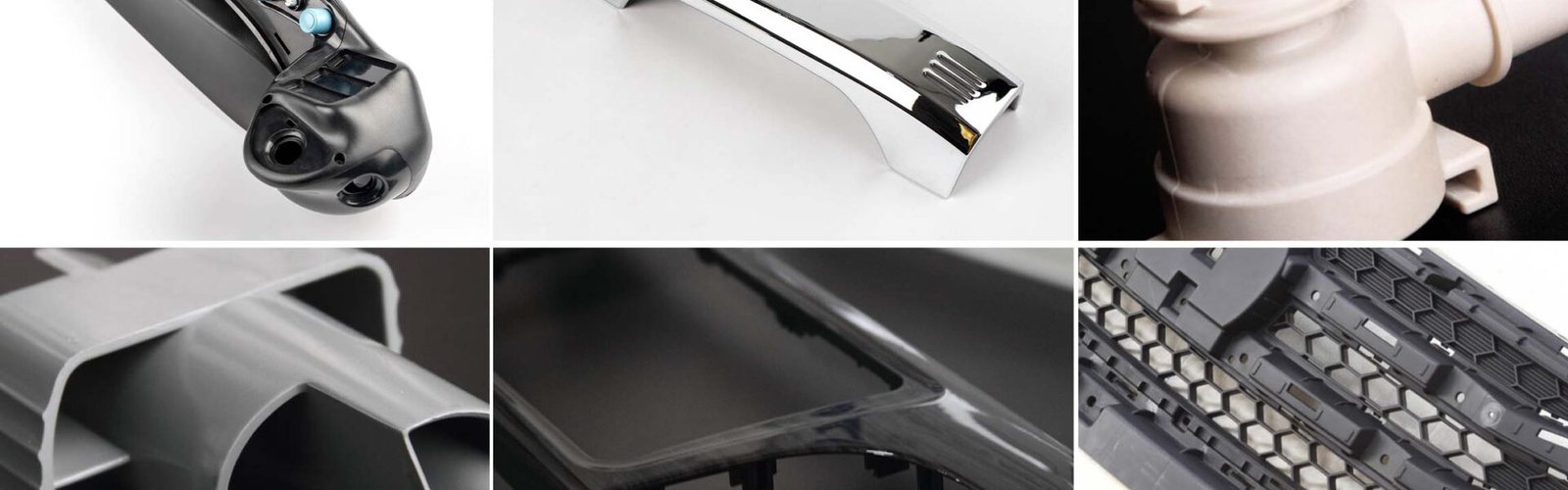
Next-generation vehicles often feature increasingly complex shapes and integrated functions. Injection molding is well suited to producing components with intricate geometries, fine details, mounting points, channels, and integrated fastening features.
During the molding process, molten polymer is injected into a carefully designed mold cavity. Once the material cools and solidifies, the finished component can be removed and prepared for assembly or additional processing.
This process makes it possible to manufacture detailed components consistently across large production runs. As vehicle designs become more sophisticated, the ability to create complex shapes without extensive secondary machining can provide significant manufacturing advantages.
Improving Interior Components
Automotive interiors contain numerous molded components, including instrument panels, door elements, center-console parts, trim pieces, vents, storage components, and protective covers.
These components need to provide more than visual appeal. They may also need to withstand temperature changes, everyday contact, vibration, and prolonged use. Injection molding allows manufacturers to create components with consistent dimensions and carefully controlled surface finishes.
Designers can also incorporate multiple features into a single molded component, potentially reducing the number of separate parts required during assembly.
Supporting Electric Vehicle Manufacturing
The transition toward electric vehicles is creating new requirements for automotive component manufacturing. Electric vehicles depend on sophisticated battery, power electronics, charging, and thermal-management systems.
Automotive Injection Molding can support the production of various plastic components used around these systems. Examples can include electrical connectors, protective covers, cable-management components, sensor housings, and selected battery-system components.
Material selection is particularly important in these applications. Components may need resistance to heat, electrical conditions, chemicals, moisture, and mechanical stress. Specialized engineering plastics can be selected to meet the requirements of individual applications.
Producing Components for Electrical Systems
Modern vehicles contain an expanding number of electronic systems. Advanced driver-assistance systems, infotainment equipment, cameras, sensors, lighting systems, and communication technologies all require carefully designed housings and supporting components.
Injection molding can produce protective enclosures and other parts with precise dimensions. Accurate molding helps ensure that components fit properly with circuit boards, connectors, sensors, and other vehicle systems.
As electronic content continues to increase, consistent manufacturing of these components becomes increasingly important.
Improving Production Consistency
Automotive manufacturers operate under strict quality requirements. A component that varies significantly from one production cycle to another can create assembly difficulties or affect vehicle performance.
Automotive Injection Molding supports repeatable production because a properly engineered mold can reproduce the same component geometry across thousands or even millions of cycles.
Modern molding equipment can also provide precise control over factors such as injection pressure, temperature, cooling, and cycle timing. Process monitoring can help manufacturers identify deviations and maintain consistent production conditions.
This repeatability is particularly valuable for automotive applications, where components must meet defined dimensional and performance specifications.
Reducing Manufacturing and Assembly Complexity
Efficient production is another important consideration for next-generation vehicles. Manufacturers continuously look for ways to reduce unnecessary processing steps while maintaining product quality.
Injection molding can integrate multiple design features into individual components. Fastening points, clips, channels, bosses, and other features may be incorporated directly into a molded part.
This can reduce the need for separate hardware or secondary operations in certain applications. Fewer individual parts can also simplify assembly and potentially reduce opportunities for assembly errors.
Supporting High-Volume Production
Automotive manufacturing requires components in large quantities. Once an injection mold has been developed, validated, and optimized, it can support repeated production cycles with relatively consistent output.
This makes the process suitable for applications where manufacturers require large volumes of identical components. Automated material handling, robotic part removal, inspection systems, and other production technologies can further improve manufacturing efficiency.
Advancing Sustainable Manufacturing
Environmental considerations are becoming increasingly important throughout the automotive supply chain. Manufacturers are examining material use, production efficiency, component lifespan, and opportunities for recycling.
Injection molding can support material-efficient component designs by allowing engineers to control wall thickness and incorporate structural features where needed. Properly designed parts can achieve required performance without unnecessarily increasing material consumption.
Depending on the application and material, manufacturers may also consider recycled or recyclable polymers. However, material selection must always account for the required safety, durability, thermal, and mechanical characteristics of the finished component.
Supporting Future Automotive Innovation
The next generation of vehicles will likely require even greater integration between mechanical, electrical, and digital technologies. Vehicle platforms are becoming more connected, while electric powertrains and automated driving technologies are changing the types of components manufacturers need.
Automotive Injection Molding provides a versatile foundation for producing many of these components. Its ability to accommodate complex geometries, engineered materials, integrated features, and high-volume production makes it relevant to both established automotive designs and emerging vehicle technologies.
As manufacturers develop new vehicle architectures, molding processes can also evolve through improved tooling, automation, simulation, process monitoring, and material development.
Conclusion
Next-generation vehicle manufacturing depends on production technologies that can combine efficiency, precision, flexibility, and reliable performance. Automotive Injection Molding addresses many of these requirements by enabling the production of lightweight, complex, and highly consistent components.
From supporting electric vehicle systems and advanced electronics to improving interior designs and simplifying assembly, injection molding has an important role throughout the automotive manufacturing process. As vehicle technologies continue to advance, manufacturers can use innovative molding techniques and engineered materials to meet changing design and performance requirements.
The continued development of tooling, automation, materials, and process control will further expand the possibilities of injection molding. For automotive manufacturers seeking efficient ways to produce sophisticated components at scale, the technology remains an important part of the manufacturing landscape.